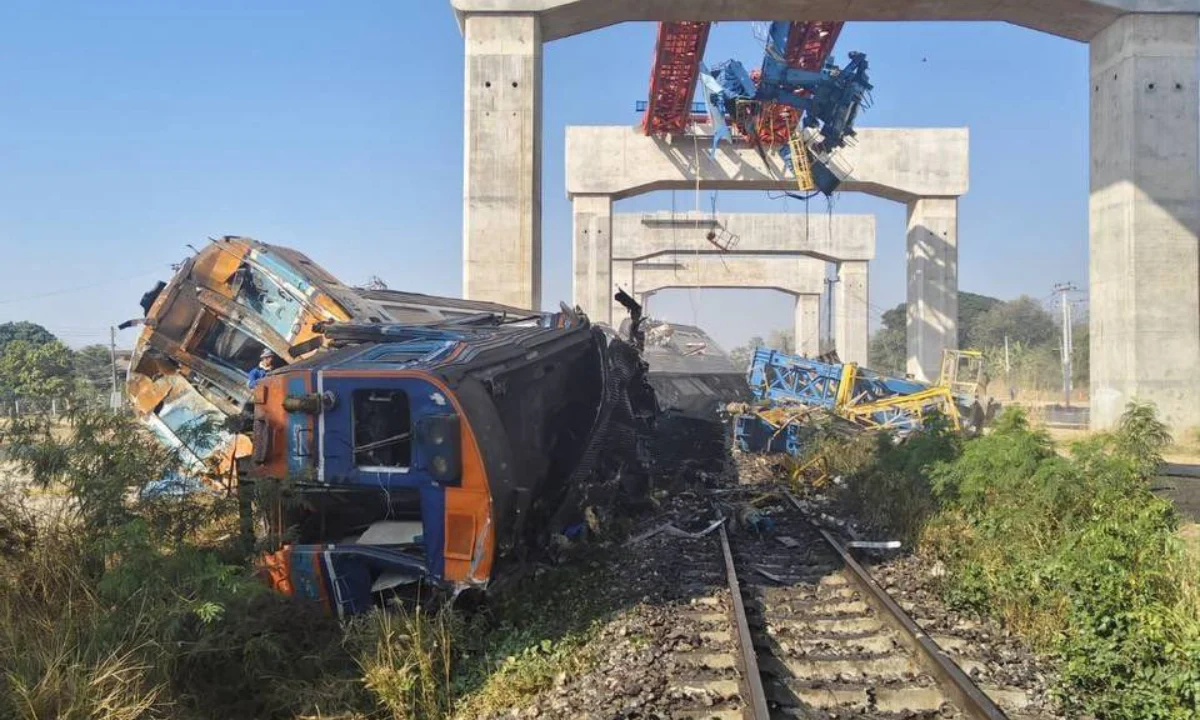
Thailand Train Accident: A Tragic Derailment
Authorities in Thailand quickly responded to the devastating Thailand Train Accident on January 14, 2026. A construction crane suddenly collapsed onto a moving passenger train near Sikhio district. Rescue teams immediately rushed to the scene, where flames engulfed several derailed carriages. Officials confirmed that the incident killed at least 30 people and injured over 60 others. Meanwhile, investigators began probing the crane’s failure during high-speed rail construction.
Furthermore, the train carried nearly 200 passengers from Bangkok to Ubon Ratchathani province. Workers on the site reportedly failed to secure the crane properly against strong winds. Consequently, the massive structure toppled directly onto the passing express train. Passengers screamed in terror as the impact hurled carriages off the tracks. However, emergency services arrived within minutes to extinguish the fire and extract survivors.
In addition, this accident highlights ongoing safety concerns in Thailand’s infrastructure projects. The government had invested billions in the China-backed high-speed rail initiative. Nevertheless, critics argue that rushed timelines compromise worker protections and equipment standards. Survivors recounted harrowing moments of chaos and confusion during the crash. For instance, one passenger described how the sudden jolt threw everyone from their seats.
Moreover, the provincial governor coordinated with national agencies to support affected families. Hospitals in Nakhon Ratchasima treated the wounded, many suffering from fractures and burns. Meanwhile, forensic experts worked tirelessly to identify the deceased amid the wreckage. Authorities suspended train services on the route indefinitely for repairs. Additionally, international media covered the event, drawing attention to global rail safety issues.
Causes Behind Thailand Train Accident
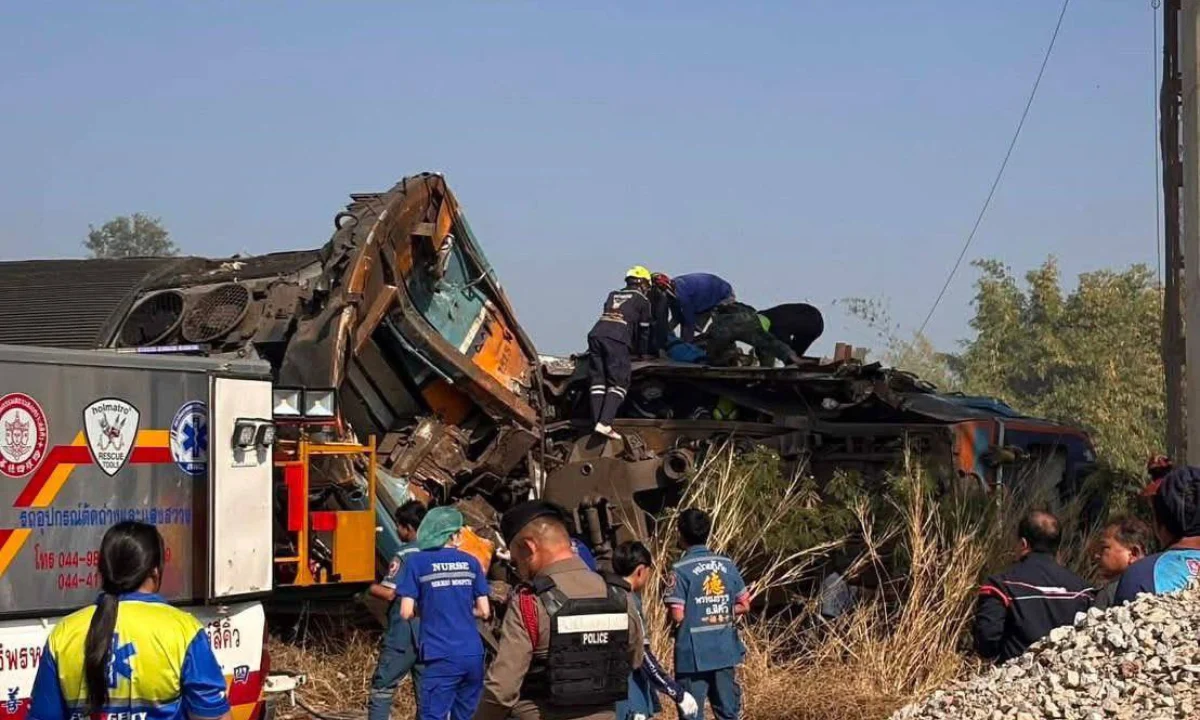
Engineers suspect that improper crane anchoring contributed significantly to the Thailand Train Crane Accident. Construction crews overlooked routine inspections before operating heavy machinery near active tracks. As a result, the crane’s cable snapped when the train passed underneath at high speed. Witnesses reported hearing a loud crash followed by screeching metal. However, preliminary reports indicate no foul play involved in the incident.
For More Stories – Trump Withdraws US From 66 Organizations | Mysterious move
Furthermore, weather conditions played a minor role, with gusty winds destabilizing the elevated crane. Project managers now face scrutiny over hiring unqualified operators. Consequently, the transport ministry launched a full investigation into compliance violations. Experts recommend stricter regulations for future builds to prevent similar tragedies. Meanwhile, public outrage grows over perceived negligence in ambitious developments.
Impacts of Thailand Train & Crane Accident
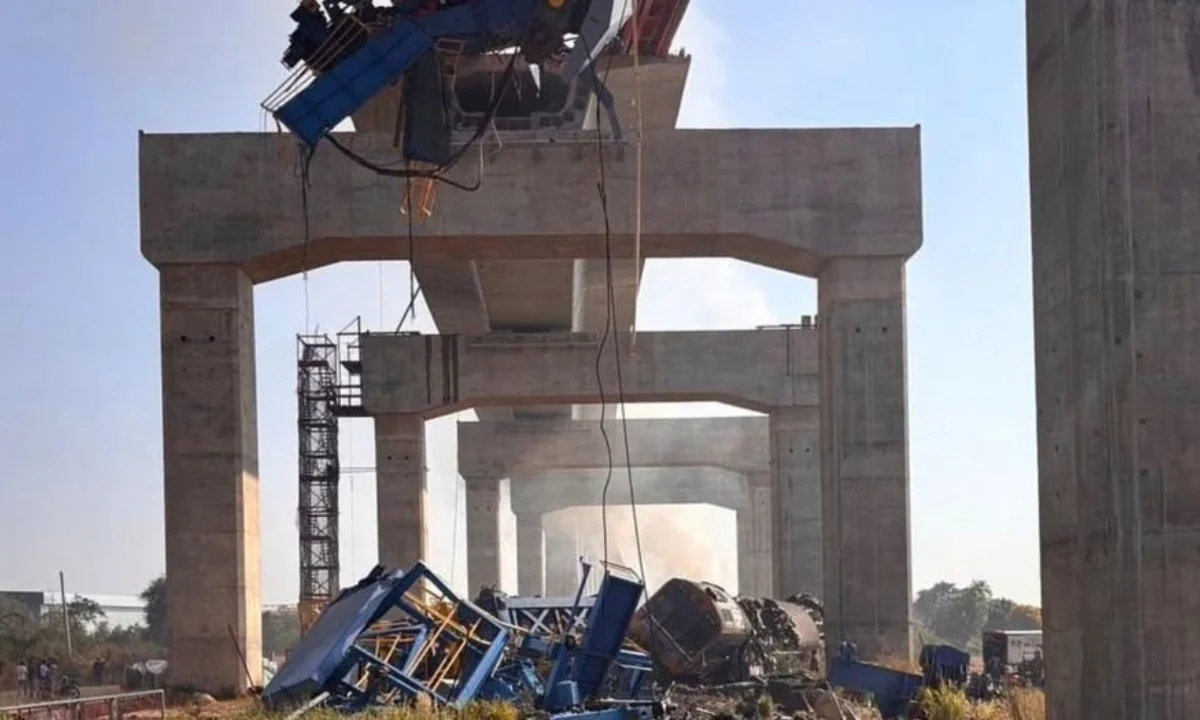
Families mourned their loved ones following the horrific Thailand Train Accident in northeast Thailand. The economic toll includes disrupted travel and costly infrastructure repairs. Additionally, tourism in the region suffers as visitors avoid potentially unsafe routes. However, community members rallied to donate blood and supplies for victims. Government officials promised compensation packages for those affected by the crash.
In contrast, this event unites Thais in calls for better safety protocols nationwide. Rail unions demand immediate audits of all ongoing projects. Moreover, international partners like China offered technical assistance for the inquiry. Survivors share stories of heroism, where passengers helped each other escape the flames. Nevertheless, the scars from this accident will linger for years in affected communities.
Overall, the Thailand Train Accident serves as a stark reminder of development risks. Policymakers must prioritize human lives over project deadlines in future endeavors. As investigations continue, the nation hopes for justice and preventive measures soon.

